
Invisible Traffic System Review: How Its YouTube-Based Traffic Routing Workflow Is Structured (And What It Actually Does)
A structured YouTube traffic approach designed for users exploring video-based visibility workflows and traffic routing methods.

Can this structured approach improve visibility consistency?
One of the most persistent challenges in digital marketing is not content creation—but content distribution. With the rapid rise of AI-generated content, the volume of material being published has increased significantly. This creates a bottleneck: visibility.
Many users can create videos, pages, or assets—but struggle to consistently route attention toward them.
The Invisible Traffic System is presented as a structured workflow focused on YouTube-based traffic mechanisms, rather than content creation itself. Based on the available product material, it appears to center around using YouTube as a placement and routing channel, though specific operational details are limited.
“This article contains affiliate links. If you click on a link and make a purchase, we may earn a small commission at no additional cost to you. We only recommend products that we believe may provide value to our readers.”
Table of Contents
- Overview of Invisible Traffic System
- The Real Challenge Behind Faceless YouTube Growth
- Why a Structured Publishing Workflow Matters
- Manual Approach (Without Invisible Traffic System)
- Where Invisible Traffic System Fits
- How Invisible Traffic System Works
- How to Use Invisible Traffic System
- Key Features of Invisible Traffic System
- Genuine Pros and Cons
- What Makes Invisible Traffic System Different
- Helpful Tips
- Frequently Asked Questions
- Final Verdict
Overview of Invisible Traffic System
The product creator

| Overview Item | Details |
| Product Name | Invisible Traffic System |
| Product Category | YouTube, Marketing Education » Video, Marketing Education » Traffic |
| Front-End Price | $17 (based on launch information available) |
| Payment Type | One-time payment |
| Niche | YouTube Automation |
| Refund / Guarantee | The official product page doesn’t specify a refund policy. Check the checkout terms or contact the vendor before buying. |
| Vendor’s Support | dave@daveespino.com |
| Official Sales Page | Visit The Product’s Official Salespage |
The Real Challenge Behind Faceless YouTube Growth
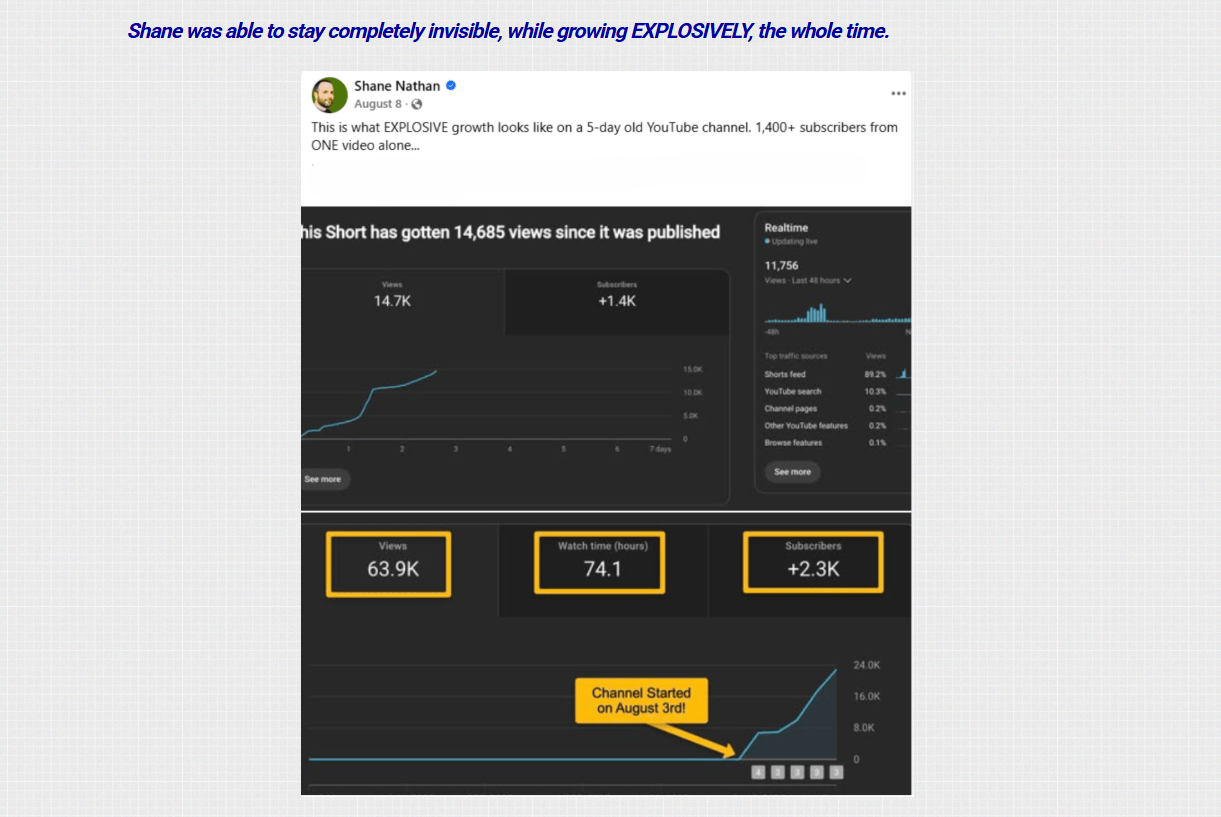
One of the central problems highlighted throughout the product material is that many YouTube creators spend significant time producing videos without building repeatable visibility. The sales page repeatedly contrasts traditional creator workflows — including filming, editing, and trend-chasing — with a more simplified faceless publishing process.
According to the product source, the creators believe many users struggle because they rely on inconsistent posting methods or attempt to imitate larger creators without a defined system. The material also suggests that creators may become overwhelmed by video editing requirements, camera work, or constant platform trend shifts.
Invisible Traffic System is positioned around reducing those operational barriers by using AI-assisted faceless videos and a repeatable publishing structure instead of personality-driven content creation.
Why a Structured Publishing Workflow Matters
The product places strong emphasis on repeatability rather than isolated viral moments. Based on the available material, the creators frame YouTube growth as a visibility-routing problem rather than purely a content-production problem.
The underlying idea appears to be that content placement and discoverability inside YouTube’s recommendation ecosystem may matter as much as production complexity. Instead of focusing heavily on expensive equipment or advanced editing workflows, the system emphasizes a simplified format designed to work within YouTube’s existing distribution environment.
The product also repeatedly references email list building as part of the broader workflow. According to the source material, the intended process is not limited to generating views alone. The creators describe a pathway where viewers may eventually become subscribers, email list members, and repeat visitors over time.
This distinction is important because the training appears to frame YouTube videos as long-term discoverable assets rather than short-term social posts.
Manual Approach (Without Invisible Traffic System)
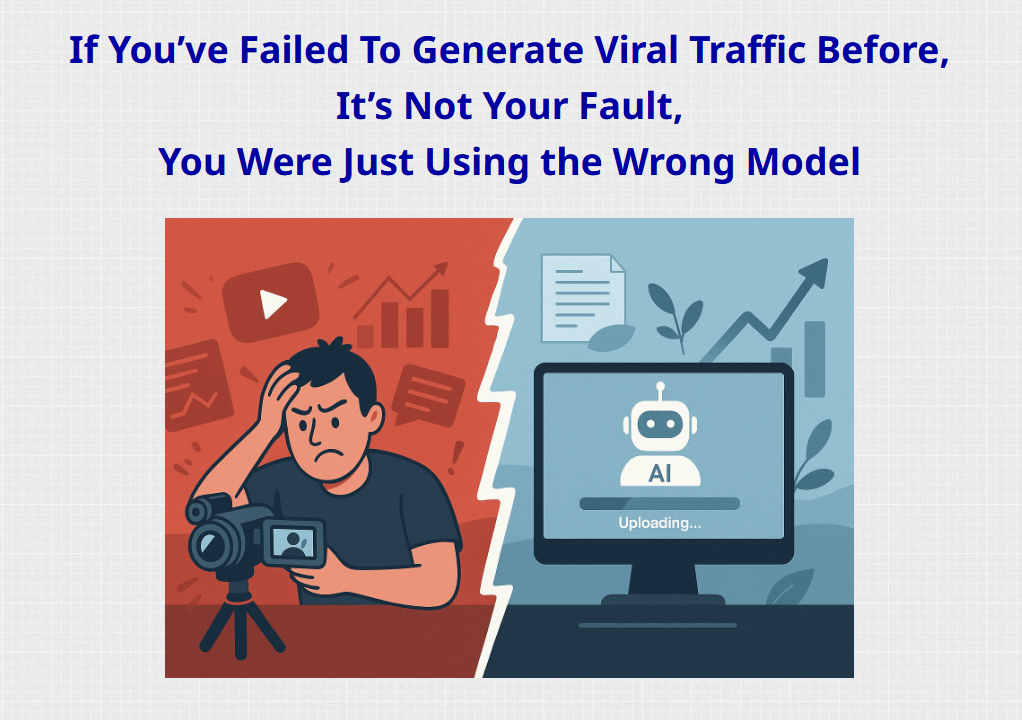
Without a structured workflow, many YouTube creators rely on inconsistent experimentation. They may upload videos randomly, follow changing trends without a defined strategy, or spend excessive time editing content that never gains sustained visibility.
The product material specifically contrasts its approach against creators who continuously chase trends, manually edit videos for hours, or attempt to compete directly with established influencers already dominating a niche.
In many cases, the traditional process may involve:
- Recording videos manually
- Managing editing software independently
- Building a personal on-camera brand
- Testing random upload ideas
- Publishing without a repeatable format
- Relying heavily on short-term trend cycles
The product suggests this fragmented workflow can create burnout and inconsistent visibility, particularly for beginners.
Where Invisible Traffic System Fits
Invisible Traffic System is presented as a structured educational workflow rather than a standalone software tool. Based on the official material, the training focuses on how users may create and publish faceless AI-assisted YouTube videos using a repeatable process.
The system appears to fit between basic beginner YouTube tutorials and advanced creator-brand courses. Instead of emphasizing personality branding or advanced production, the training focuses on simplified execution, AI-assisted creation, and repeatable publishing behavior.
According to the source material, the training includes:
- Faceless video creation workflows
- AI-assisted content generation
- Channel setup guidance
- Video format structuring
- Visibility-oriented publishing methods
- Traffic-to-list routing concepts
The product is not described as a fully automated system. Instead, users are expected to follow a structured process step-by-step.
How this YouTube-based workflow is structured?
Invisible Traffic System focuses on AI-assisted faceless YouTube publishing workflows, channel setup guidance, and visibility-focused video structuring. Reviewing the official material may help clarify how the system approaches content distribution and repeatable publishing.
How Invisible Traffic System Works
Create Faceless Videos Using AI-Assisted Tools
The first stage focuses on producing videos without requiring filming, voice recording, or traditional on-camera presentation.
According to the product material, Shane uses AI-powered tools to create videos quickly. The page specifically states that many of the tools used are free or low-cost, although exact software names are not clearly specified.
The emphasis is on simplified content production using faceless video formats.
Publish Using a Specific Video Format
The second stage centers around uploading videos using what the creators describe as a video format currently being favored by YouTube’s algorithm.
The exact technical structure of this format is not fully explained in the sales material. However, the product repeatedly claims that the publishing workflow is designed to work with YouTube’s recommendation environment rather than against it.
The platform environment is clearly YouTube.
Route Attention Into Subscriber and List Growth
The final stage shifts focus from temporary visibility to strategic audience routing. According to the source material, the workflow intentionally directs viewers toward channel subscriptions, clicks, and email list growth.
The creators emphasize that the long-term goal isn’t just fleeting views; instead, the system transforms YouTube traffic into a discoverable asset that generates sustained visibility long after publishing. This repeat-loop behavior is central to the product’s positioning.
How Invisible Traffic System Works in Practice
From a beginner perspective, the workflow appears designed around simplified execution rather than advanced creator branding.
A typical user process, based on the official material, would likely involve:
- Setting up a faceless YouTube channel
- Using AI-assisted tools to create videos
- Publishing videos using the recommended structure
- Monitoring video traction over time
- Scaling uploads into additional niches if desired
The product repeatedly emphasizes repeatability. According to the sales page, Shane reportedly tested the workflow across multiple channels and niches.
However, it is important to note that the product also includes clear disclaimers stating that results vary and are not guaranteed.
The training appears most suitable for users seeking a simplified content workflow rather than advanced production techniques.
Key Features of Invisible Traffic System
Invisible Traffic System includes several workflow-focused training components directly referenced in the official product material. The training is positioned around simplified video publishing rather than advanced production complexity.
According to the source page, the included elements consist of:
- Guidance for creating faceless videos in approximately 10 minutes or less
- AI-assisted workflow tools used within the publishing process
- Fast faceless YouTube channel setup guidance
- A specific video format described as aligned with current YouTube distribution behavior
- Methods for scaling visibility across additional uploads and niches
- Strategies intended to help convert YouTube traffic into subscribers and email-list growth
- Step-by-step process instructions
- Workflow examples reportedly tested across multiple channels
The product also emphasizes that users are not required to appear on camera, use a microphone, or purchase expensive studio equipment.
However, exact implementation details and software specifications are not fully outlined in the public sales material.
Genuine Pros and Cons
Pros:
- Strong focus on faceless YouTube workflows
- Simplified publishing-oriented structure
- AI-assisted creation approach
- Emphasis on repeatable publishing behavior
- Does not require on-camera presentation
- Includes traffic-to-list routing concepts
Cons:
- Exact AI tools are not fully specified publicly
- Limited technical detail available before purchase
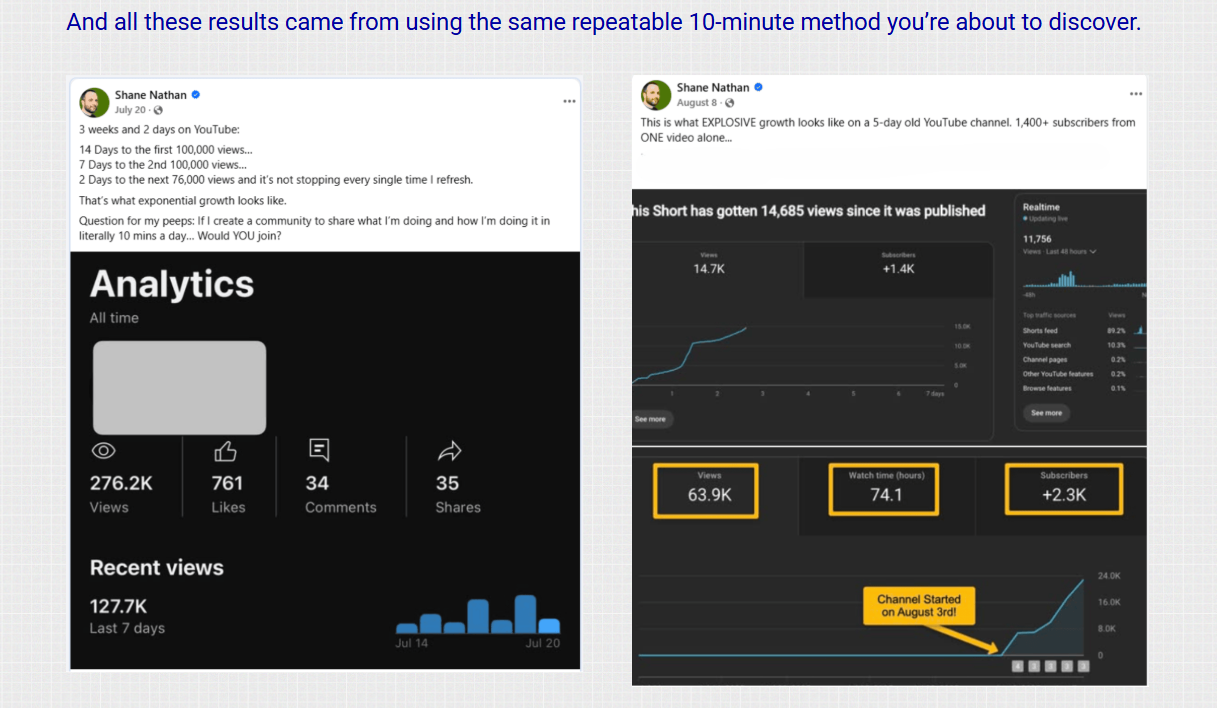
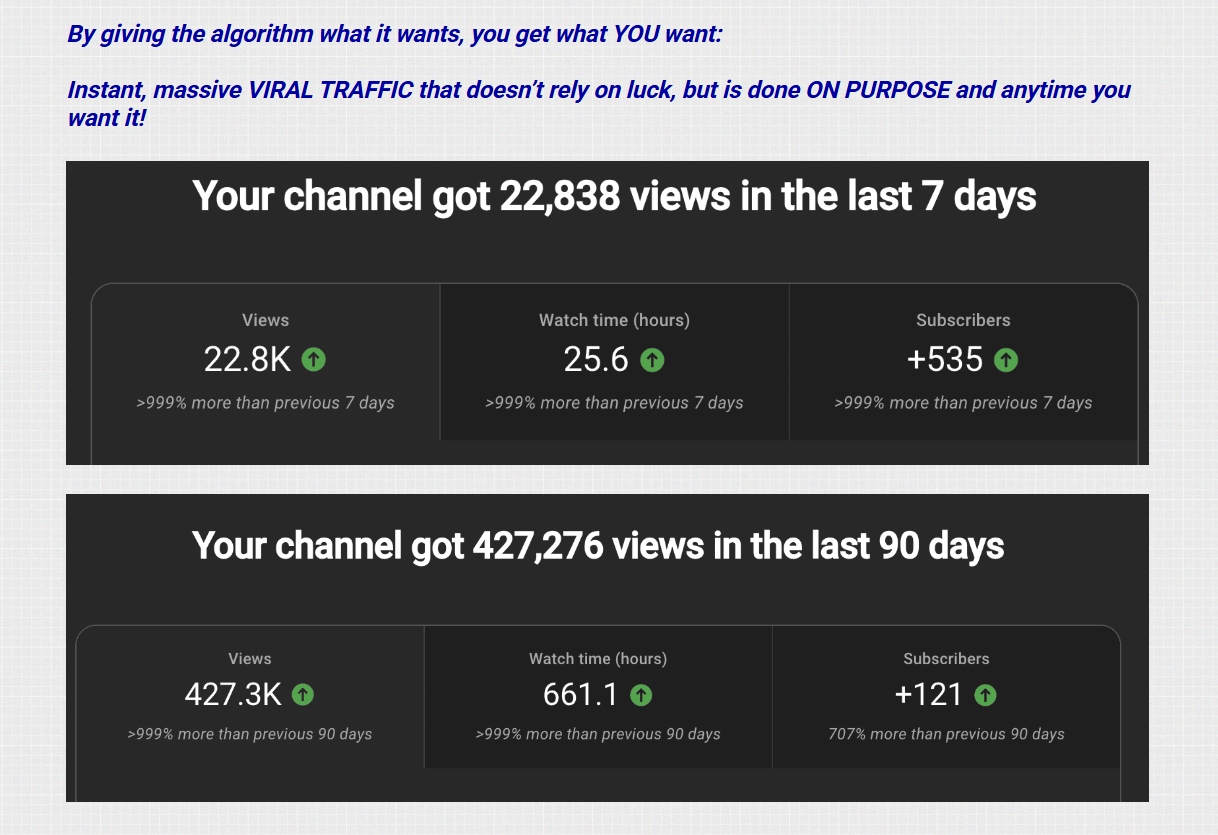
- Strong performance claims rely primarily on creator examples
- Workflow depends heavily on YouTube platform behavior
- Results discussed in the material are not typical guarantees
What Makes It Different
One of the more distinctive aspects of Invisible Traffic System is that it focuses heavily on distribution structure rather than content personality.
Many YouTube courses emphasize:
- personal branding
- filming quality
- editing style
- audience personality development
This product takes a different direction by emphasizing:
- faceless publishing
- AI-assisted creation
- algorithm-oriented formatting
- repeatable upload workflows
Another notable difference is the focus on routing visibility into owned assets such as email subscribers. According to the sales material, the creators view YouTube not only as a content platform but also as a discoverability channel that may continue generating traffic over time.
The product also repeatedly frames videos as discoverable platform assets rather than temporary social posts.
However, the exact long-term sustainability of the workflow is not clearly specified in the product material.
Can this approach help structure your YouTube traffic efforts?
Reviewing the workflow may help determine whether it aligns with your current content strategy.
Helpful Tips Before Using Product Research Tools
Users exploring this type of workflow may benefit from maintaining realistic expectations about YouTube publishing. The product material itself includes disclaimers stating that results vary significantly based on execution, experience, and platform conditions.
A few practical considerations include:
- Focus on consistency rather than isolated uploads
- Test video formats gradually across niches
- Learn YouTube platform behavior over time
- Avoid relying entirely on AI-generated output quality
- Track which publishing structures create stronger engagement
- Maintain realistic expectations regarding visibility timelines
Because the workflow appears highly dependent on YouTube discoverability patterns, ongoing testing may still play an important role.
Frequently Asked Questions
What is Invisible Traffic System?
Invisible Traffic System is a training product focused on faceless YouTube publishing workflows, AI-assisted video creation, and traffic generation strategies based on the official product material.
Does Invisible Traffic System require showing your face?
According to the sales page, the workflow is designed around faceless video publishing and does not require on-camera presentation.
Are AI tools included?
The product mentions AI-powered tools used within the workflow. However, the exact software tools are not fully specified publicly.
Is Invisible Traffic System beginner friendly?
Based on the available information, the training appears positioned toward beginners and users seeking simplified YouTube publishing methods.
Does the product guarantee results?
No. The product includes multiple disclaimers stating that outcomes vary and that no guarantees are provided.
Can the workflow be used in multiple niches?
According to the product material, the creators tested the process across more than one YouTube niche using separate channels.
Final Verdict
Invisible Traffic System is a structured educational workflow focused on faceless YouTube publishing and AI-assisted video creation. It combines core strategy training with repeatable upload structures, simplified execution, and strategic visibility routing.
Product Name: Invisible Traffic System
Launch Price: $17
The front-end package serves as a complete blueprint for beginners and YouTube automation creators to publish content without expensive equipment. Its primary differentiator is teaching users to treat YouTube traffic as a long-term, discoverable asset. While sales materials showcase high performance metrics, buyers should focus on the practical utility of the workflow structure rather than treating headline view counts as standard outcomes.
OTO 1 – 10 Ways to Monetize Invisible Traffic ($47.00):
This upgrade appears to include advanced monetization frameworks designed to help creators diversify their income streams from faceless traffic beyond standard ad revenue.
OTO 2 – Channel Flipping System ($27.00):
This version includes specialized training on how to build, optimize, and safely flip YouTube channels for a lump-sum profit once they gain traction.
OTO 3 – Faceless Channel Fast Start Toolkit ($27.00):
This upgrade focuses on accelerating the initial setup phase, likely including ready-made templates, assets, and deployment resources to get a new channel live quickly.
OTO 4 – Done-For-You Niche Packs ($17.00):
The Niche Packs appear to provide pre-researched, low-competition niche ideas and market data to save creators from the initial trial-and-error phase.
OTO 5 – AI Course Bundle ($197.00):
This massive package features 18 distinct AI-focused courses designed to expand the user’s technical skills across various AI content creation tools and platforms.
OTO 6 – NEW YouTube Sales Machine ($497.00):
The highest-tier upgrade focuses on turning video views into an automated sales funnel, emphasizing audience routing toward subscriptions, clicks, and email list growth.
For additional upgrade options, bundle packages, funnel systems, and membership plans, users can check the official vendor page during the checkout process.
“This article contains affiliate links. If you click on a link and make a purchase, we may earn a small commission at no additional cost to you. We only recommend products that we believe may provide value to our readers.”
Want to review the full structure and positioning directly from the source?
You can explore the official page to better understand how the system is described and what it includes.
Important Disclaimer
This article is for informational and educational purposes only. Invisible Traffic System is a third-party product, and this review is based on publicly available product material.
Affynza.com is not the creator or owner of the Invisible Traffic System product and does not provide customer support for it. For product support, account access, or technical assistance, please contact the official vendor.
Product features, pricing, bonuses, and availability may change at any time at the vendor’s discretion.
This article is provided for informational purposes only. Marketplace selling activities involve various factors such as product selection, research, marketplace policies, and competition. Because of this, individual experiences may vary and specific outcomes cannot be guaranteed.